

Could a professional certification established over a century ago be the most sophisticated shield against the generative AI revolution of 2026? As automated systems handle increasingly complex data processing, many finance professionals are rightfully questioning whether a multi-year commitment remains a sound strategic move. You likely feel that the high upfront costs and the intensive study periods require a level of certainty that the current market rarely provides. It's a critical moment to ask if is getting an ACCA qualification worth it when the global economy demands strategic foresight over simple technical execution.
This analysis provides a disciplined look at the return on investment for the modern practitioner. We'll move beyond the prestige to examine tangible benchmarks, such as the 20% to 30% salary increase typically seen upon achieving member status and the £50,000 average salary for qualified professionals in the UK. You'll gain a clear understanding of the 2026 fee structures, including the £147 Applied Skills exam costs, and see how this qualification functions as a leadership framework. We'll also compare the ACCA against other certifications to provide a precise roadmap for your professional security and long-term career trajectory.
Key Takeaways
- Understand how the transition from transactional accounting to strategic business partnership redefines professional value in an AI-driven economy.
- Evaluate the total financial commitment against long-term global mobility to determine if getting an ACCA qualification worth it for your specific career objectives.
- Discover how the Strategic Business Leader (SBL) module serves as a framework for executive decision-making and high-level corporate governance.
- Gain a transparent breakdown of the "time tax" and cumulative fees to build a disciplined, four-year roadmap toward full membership.
- Learn to identify high-quality tuition support that prioritizes active, exam-focused practice over passive content consumption.
Analyzing the Real ROI of ACCA in the 2026 Finance Landscape
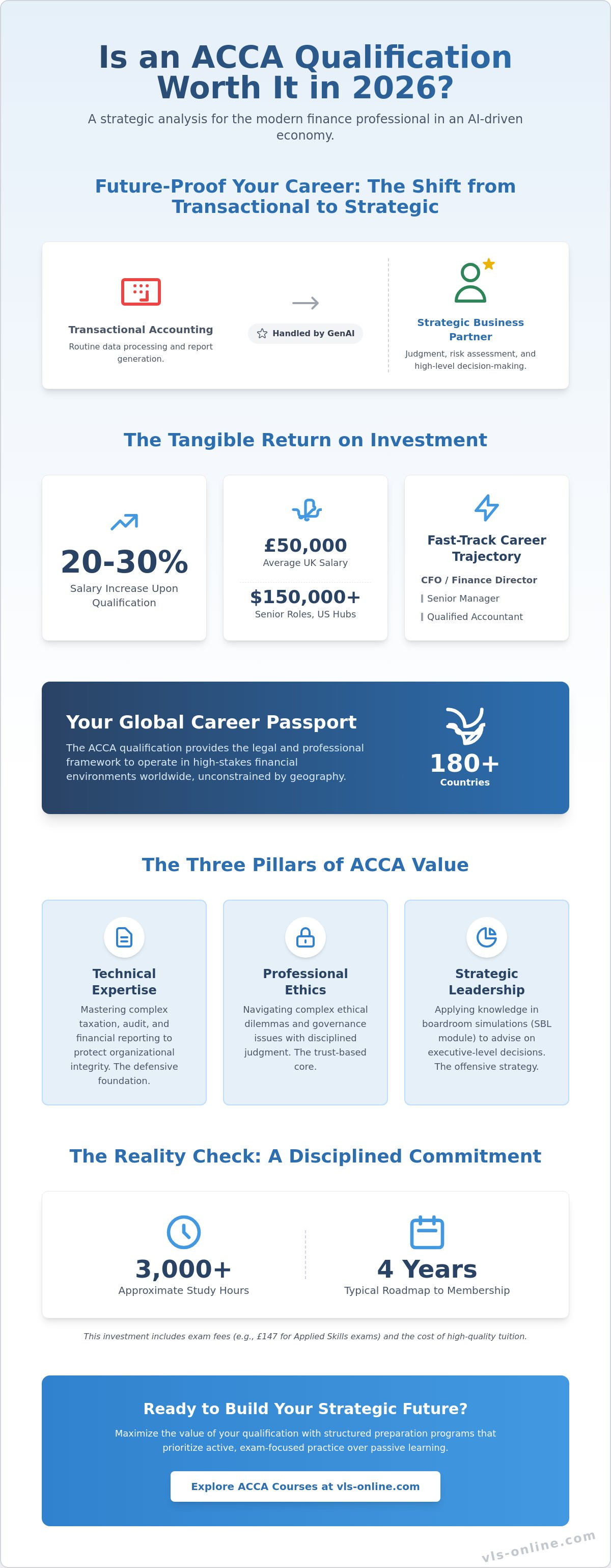
The return on investment for a professional qualification isn't merely a calculation of exam fees against a starting salary. It's a strategic ratio where you weigh lifetime earnings and global mobility against approximately 3,000 hours of study and the cumulative cost of tuition. In 2026, the question of whether is getting an ACCA qualification worth it depends on your desire to move beyond transactional accounting. As automated systems handle routine data processing, the value of a professional shifts toward strategic business partnership. This transition ensures that your role remains relevant in an era dominated by algorithmic efficiency.
Professional judgment is the cornerstone of the advanced modules. While AI can generate reports, it cannot navigate the ethical nuances or complex risk assessments required in modern governance. This "AI-proof" nature of the qualification provides a security that technical skills alone cannot offer. Unlike local certifications that may tether you to a specific jurisdiction, the Association of Chartered Certified Accountants (ACCA) offers a framework that is respected globally, allowing for a seamless transition between diverse industries and markets.
The Global Mobility Advantage
This qualification acts as a global passport across more than 180 countries. Its value is anchored in mutual recognition agreements with numerous international accounting bodies, which facilitates professional practice across borders. If you intend to build a career that isn't limited by geography, the structural portability of this designation is a significant asset. It provides the legal and professional protection needed to operate in high-stakes financial environments worldwide.
Salary Benchmarks and Career Trajectory
Concrete data supports the financial incentive for pursuing this path. Professionals typically experience a 20% to 30% salary increase immediately upon achieving full member status. In the United Kingdom, the average salary for a qualified accountant is estimated at £50,000, while senior professionals in major US financial hubs can earn upwards of $150,000 annually. This path provides a clear, fast-track trajectory toward senior management roles such as Finance Director or CFO. By engaging with specialized ACCA courses, you prepare for the executive decision-making roles that define the upper tiers of the finance sector.
The 3 Pillars of ACCA Value: Expertise, Ethics, and Leadership
To determine if is getting an ACCA qualification worth it, you must evaluate the structural pillars that define the designation. It isn't merely a series of academic hurdles. Instead, the curriculum builds a foundation of technical, ethical, and leadership competencies designed to meet the rigorous demands of the 2026 corporate environment. The initial stages focus on technical expertise, where the Applied Skills level provides the precision required for complex taxation and audit engagements. This ensures you possess the defensive knowledge necessary to protect an organization's financial integrity.
The transition to the Strategic Professional level shifts the focus toward high-level decision-making. The Strategic Business Leader (SBL) module is particularly significant; it simulates boardroom scenarios that require you to move beyond data entry into the role of a trusted advisor. This training is a primary catalyst for global career success, as it prepares you to drive organizational value at the executive level. For those aiming to reach these heights, our guide on Mastering the ACCA Strategic Professional Level provides a detailed roadmap for success.
Professional integrity remains the most valued trait by global employers. The 2026 economy rewards those who can navigate ethical dilemmas with calm, disciplined judgment. This ethical training, combined with a deep understanding of governance, creates a professional "safety net" for stakeholders. If you're looking to build this foundation efficiently, you might consider exploring our structured ACCA preparation programs to ensure your study time translates into professional results.
Future-Proofing Through Advanced Modules
Success in the modern market requires specialization. The Strategic Business Reporting (SBR) module prepares you for the complexities of global reporting standards, ensuring your skills remain relevant across jurisdictions. Elective options like Advanced Financial Management (AFM) allow you to tailor your career path toward specific sectors, such as investment banking or corporate treasury, providing a competitive edge in specialized niches.
The Networking and CPD Ecosystem
Membership offers access to a network of over 250,000 professionals. This community serves as a repository of mentorship and job referrals, which is often as valuable as the certificate itself. To maintain elite status, members must complete Continuing Professional Development (CPD). This requirement ensures your expertise never becomes obsolete, providing long-term security in a rapidly changing financial landscape.
The Reality Check: Evaluating Costs, Difficulty, and Time
Every strategic investment requires a transparent assessment of liabilities. Deciding if is getting an ACCA qualification worth it involves accounting for fixed costs like the £89 registration fee and annual subscriptions between £122 and £140. Exam fees scale with your progress. Applied Skills papers cost £147 each, whereas the Strategic Business Leader (SBL) exam requires £260 to £282. Including tuition, the total investment ranges from £1,200 to £4,500. This capital outlay secures your place in a globally recognized professional elite.
The "time tax" remains the most demanding aspect of this journey. You should anticipate roughly 3,000 hours of study spread across three to four years. While pass rates are rigorous, professional tuition provides a safety net that significantly improves your success probability. It shifts the focus from rote memorization to the application of professional judgment. To master these techniques, review our Strategic Guide to Passing Professional Certifications for 2026.
Balancing Work, Life, and ACCA
Professionals must establish a disciplined, steady-state study rhythm to avoid burnout. Employer sponsorship is a critical variable in this ROI calculation. Many firms provide study leave and fee coverage, which drastically reduces your personal financial exposure while accelerating your career trajectory. This support system ensures that your professional development doesn't compromise your current operational responsibilities.
The Entry Route Decision
Your entry point is determined by your prior qualifications. Degree holders might receive up to nine exemptions, saving nearly £1,500 in fees and months of study. For those without a finance background, starting with the Foundation level is a prudent choice. Our guide on ACCA Applied Knowledge outlines this path for 2026. To maximize your efficiency, consider our full access ACCA training solutions to streamline your preparation.
Strategic Success: How to Maximize the Value of Your Qualification
Maximizing the return on your investment requires a shift from passive consumption to active engagement. Many candidates fail by relying solely on recorded content; however, true mastery comes from professional feedback. Selecting ACCA online tuition with tutor support ensures that your technical misunderstandings are corrected before they become exam-day liabilities. You should prioritize interactive practice questions and exam-focused notes over passive reading. This method streamlines the learning process and builds the stamina required for the professional level.
Maintain accountability through live sessions and dedicated WhatsApp support groups. These tools simulate a classroom environment, providing the necessary structure to remain disciplined throughout the three-year journey. By reducing the risk of expensive retakes, you protect your financial and emotional capital. It's a strategic move that ensures your progression remains linear and efficient.
Building Your Professional Portfolio
You don't need to wait for full membership to see a tangible return. Part-qualified status is a powerful lever for negotiating salary increments during annual reviews. In the 2026 job market, integrating advanced Excel skills and specialized IFRS knowledge makes you indispensable. Employers seek professionals who can translate complex data into actionable strategic insights. Stand out by demonstrating how your evolving expertise directly optimizes departmental efficiency.
Final Verdict: Is it Worth It?
The evidence suggests that the long-term career stability provided by this designation far outweighs the short-term sacrifice of time and fees. When asking if is getting an ACCA qualification worth it, consider the alternative of career stagnation in an increasingly automated world. This qualification isn't just a certificate; it's a preventive measure against obsolescence. It represents a commitment to professional excellence and financial security. If you're ready to secure your future, view our comprehensive ACCA course packages and start your journey today.
Securing Your Place in the Future of Finance
Investing in your professional development requires a disciplined, long-term perspective. As the finance sector evolves toward strategic advisory roles, the need for a globally recognized framework has never been more critical. When evaluating if is getting an ACCA qualification worth it, the answer lies in the structural security and global mobility it provides. It's a commitment to professional integrity that positions you as a leader in an increasingly automated economy. By mastering the required exams, you aren't just earning a certificate; you're building a resilient career trajectory that spans industries and borders.
Success on this path depends on the quality of your preparation. VLS Online provides a professional safety net through London-based expert tutors and exam-focused study materials updated for 2026. You'll have access to active WhatsApp support to maintain accountability and resolve complex technical questions in real time. This structured approach reduces the risk of costly retakes and ensures your study time translates into measurable results. Start your strategic ACCA journey with expert tutor support at VLS Online and take the first step toward a future of professional stability and growth.
Frequently Asked Questions
Is ACCA harder than a Master’s degree in Accounting?
ACCA is generally considered more rigorous than a Master's degree because it demands the application of professional judgment in complex, real-world scenarios. While a university degree focuses on academic theory within a controlled environment, the ACCA qualification requires candidates to complete 36 months of supervised work experience. This practical experience requirement ensures that members can navigate the nuances of the global financial landscape, which academic study alone cannot replicate.
Can I get a high-paying job after passing only the ACCA Applied Knowledge level?
Passing the Applied Knowledge level qualifies you for entry-level roles such as junior accountant or accounts assistant, with starting salaries typically ranging from $30,000 to $50,000 annually. These positions provide a stable foundation, but the most lucrative opportunities are reserved for those who progress further. High-paying senior roles, such as Finance Director or CFO, generally require the completion of the Strategic Professional level and full member status.
How much does the total ACCA qualification cost in 2026 including tuition?
The total investment for the full qualification in 2026 is estimated to range between £1,200 and £4,500. This comprehensive figure includes the £89 initial registration fee, annual subscriptions of £122 to £140, and per-exam fees that scale as you progress. For instance, Applied Skills exams cost £147 each, while the Strategic Business Leader (SBL) exam ranges from £260 to £282. Utilizing structured tuition providers can help optimize this cost by reducing the likelihood of expensive retakes.
Is ACCA still relevant with the rise of AI in the finance industry?
ACCA remains highly relevant because it shifts the focus from transactional data processing to strategic leadership and ethical oversight. While AI optimizes routine calculations, it cannot replicate the professional skepticism and risk assessment skills taught in the advanced modules. When evaluating if is getting an ACCA qualification worth it, you must consider that the 2026 economy prioritizes human advisors who can interpret AI-generated data to drive organizational value.
What is the average salary of an ACCA member in the UK vs. internationally?
A qualified ACCA accountant in the UK earns an average of £50,000 per year, with experienced professionals in major hubs often earning over £100,000. Internationally, the earning potential remains strong; members in the United States average $85,000 annually, while fresh affiliates in India typically start between ₹6 and ₹8 lakh. Achieving full membership status generally results in an immediate salary increment of 20% to 30%, reflecting the increased strategic value you bring to an employer.