

The traditional belief that ACCA success requires sacrificing your professional performance or personal well-being is a fundamental misconception. Many finance professionals struggle with constant fatigue and the persistent fear of failing expensive exams, yet the secret to qualification lies in integration rather than isolation. Learning how to study for ACCA while working full time is not about finding more hours in a day that is already overstretched. Instead, it involves adopting a strategic framework that treats your education as a high-level extension of your career.
We understand the difficulty of switching from a demanding work environment to a focused study mindset after a long day. This guide provides a professional roadmap to help you maintain a sustainable routine while aiming for first-time passes in the 2026 exam sessions. You'll discover how to master the new syllabus focus on AI and IFRS 18 concepts, navigate the return to in-person exam centers starting in March 2026, and use micro-learning to advance your career without the risk of burnout. By following this structured approach, you can join the 257,900 members who have successfully navigated this path with calm confidence.
Key Takeaways
- Transition from an "all-or-nothing" mindset to a strategic model that integrates professional responsibilities with the 2026 digital exam landscape.
- Implement the Flow Study Framework to optimize your preparation by auditing cognitive energy levels rather than merely tracking available hours.
- Identify "easy wins" by mapping the ACCA syllabus directly to your current workplace experience for more efficient knowledge retention and application.
- Explore professional techniques for how to study for ACCA while working full time using micro-learning strategies that transform marginal time into active learning opportunities.
- Leverage the benefits of structured online environments and live sessions to maintain high levels of accountability without the logistical burden of a physical classroom.
The Reality of Balancing ACCA and a Full-Time Career in 2026
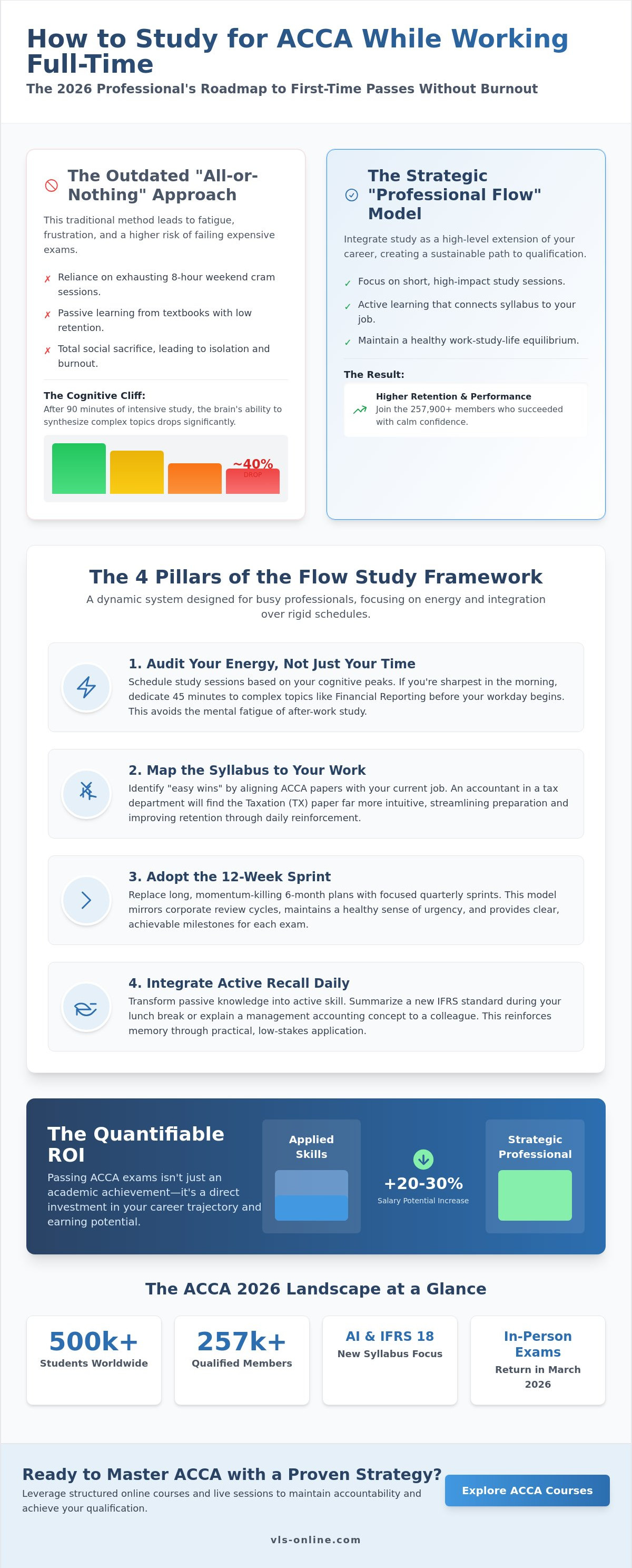
The landscape of professional education has shifted significantly as we enter 2026. The outdated "all-or-nothing" approach, which demanded total isolation and social sacrifice, is no longer a viable strategy for the modern finance worker. Understanding how to study for ACCA while working full time requires a transition toward "Professional Flow." This is a mindset where learning is treated as a strategic career development task rather than a burdensome chore. By integrating study into your daily professional rhythm, you reduce the psychological friction that leads to procrastination and burnout.
The 2026 digital environment offers unprecedented flexibility for those pursuing the Association of Chartered Certified Accountants (ACCA) qualification. With over 500,000 students worldwide as of December 2025, the demand for structured, remote-accessible learning has peaked. Professionals who maintain a work-study-life equilibrium report higher retention rates and better exam performance. This balance isn't just a lifestyle choice; it's a calculated approach to risk management in your own career progression. Utilizing specialized ACCA courses allows you to maintain this stability while meeting the rigorous demands of the updated 2026 syllabus.
Why Traditional Study Methods Fail Busy Workers
Many candidates fall into the trap of the "8-hour weekend session." Research into cognitive load suggests that after the first 90 minutes of intensive focus, the brain's ability to synthesize complex financial regulations drops by nearly 40%. Passive reading of textbooks is equally ineffective. It lacks the engagement required to master the application-heavy 2026 exams, which now emphasize IFRS 18 concepts and AI integration. Relying on outdated, static methods often leads to the very fatigue and failure that professionals fear most.
The ROI of the ACCA Qualification
The financial and professional return on investment for those who master how to study for ACCA while working full time is quantifiable. Moving from Applied Skills to the Strategic Professional level often correlates with a 20% to 30% increase in salary potential within multinational firms. Success in these exams directly translates to workplace competence. It signals to employers that you possess the discipline to manage complex projects while keeping pace with the dynamic nature of 2026 tax legislation and global reporting standards.
The Flow Study Framework: Strategic Planning for Professionals
Mastering how to study for ACCA while working full time requires a shift from rigid calendars to a dynamic Flow Study Framework. The first step involves auditing your energy cycles rather than just your available hours. If you're most alert in the early morning, dedicate 45 minutes before your workday to complex technical subjects like Financial Reporting. This prevents the cognitive decline that occurs after an eight-hour shift. Second, map the syllabus to your current professional responsibilities to identify "easy wins." An accountant working in a tax department will find the Taxation (TX) paper significantly more intuitive, allowing for a more streamlined preparation process.
The third pillar of this framework is the 12-week sprint. Unlike traditional six-month plans that often lose momentum, a quarterly sprint mirrors corporate review cycles and maintains a sense of urgency. Finally, integrate active recall into your professional life. Summarizing a new IFRS standard during a lunch break or explaining a management accounting concept to a colleague reinforces memory through practical application. Utilizing tactical time management advice ensures that every study session is optimized for maximum retention without sacrificing your professional output.
Adapting Strategy by ACCA Level
Your approach must evolve as you progress through the qualification. At the Applied Knowledge level, focus on the breadth of understanding and speed of execution. However, mastering the ACCA Strategic Professional level requires a transition toward high-level synthesis and case study analysis. At this stage, professional skepticism and the ability to link disparate financial concepts are more valuable than simple memorization. Success here depends on your ability to think like a strategic leader rather than a student.
Creating a High-Performance Study Environment
Environment dictates output. Practice strict digital hygiene by disabling work-related notifications on the devices you use for learning. When exhaustion makes starting difficult, apply the "5-minute entry" rule. Commit to only five minutes of reviewing a summary or watching a lecture snippet. This low-friction start often overcomes the mental barrier of switching from "work-brain" to "study-brain." For many professionals, a structured online environment provides the necessary guardrails to maintain this focus consistently across the 12-week sprint.
Tactical Time Mastery: Leveraging Micro-Learning & Support
Efficiency in professional education isn't achieved by sacrificing sleep; it's gained by reclaiming "dead time." Commutes, lunch breaks, and even the minutes between meetings represent untapped potential for micro-learning. Instead of attempting to read a 500-page manual during a 20-minute train ride, focus on one specific learning objective. This might involve reviewing a set of flashcards on audit risk or listening to a podcast about consolidated financial statements. By breaking the syllabus into manageable, bite-sized components, you maintain momentum without the cognitive fatigue associated with marathon sessions.
Learning how to study for ACCA while working full time also requires a strategic approach to low-energy periods. When you're too exhausted for active calculation, recorded lectures serve as a high-value alternative. These resources allow you to absorb complex concepts passively before transitioning back to active practice when your focus returns. Don't allow a single difficult concept to become a bottleneck. Professional tutor support and peer WhatsApp groups provide a safety net, allowing you to resolve technical queries in minutes rather than wasting hours in frustration. If you want to secure your path to qualification, consider enrolling in our full access ACCA program which provides the direct tutor support needed to break through these learning bottlenecks.
The Power of On-Demand Resources
On-demand video content is a cornerstone of modern preparation. It offers the "pause and practice" functionality essential for busy professionals who may need to revisit a complex tax computation multiple times. By using exam-focused notes rather than standard textbooks, you bypass unnecessary academic fluff and focus strictly on what's required to pass. This structured approach ensures that even during peak busy seasons at work, your progress doesn't stall.
Accounting Exam Study Tips for 2026
The most effective accounting exam study tips for 2026 emphasize early practice testing over repetitive reading. With ACCA shifting back to in-person exam centers from March 2026, simulating these conditions is vital. Set a timer, remove all external aids, and practice on a platform that mirrors the official CBE environment. This builds the mental stamina required for the three-hour examination window. Consistent, timed practice is the only way to ensure that your knowledge translates into the specific application skills rewarded by 2026 examiners.
Sustaining Momentum: The VLS Online Advantage
While online forums often champion self-study as a cost-saving measure, this approach frequently results in higher long-term expenses due to repeated exam failures and lost career progression. Mastering how to study for ACCA while working full time requires a professional structure that eliminates the "isolation factor" common in remote learning. Vertex Learning Solutions provides a sophisticated framework that offers the accountability of a traditional classroom without the logistical burden of a physical commute. This stability is essential for maintaining focus across the 12-week sprints required for the 2026 exam sessions.
Weekly live sessions play a critical role in simulating a high-performance environment. These interactions foster engagement and provide a professional sounding board for complex technical queries. Expert tutor support remains the most significant factor in reducing study-related stress. Instead of losing hours to a single difficult concept, students have access to a professional safety net that ensures their momentum remains constant. As you approach the final week of preparation, focus shifts from learning new content to refining exam technique and managing the transition to the in-person exam centers mandated for the March 2026 session.
Choosing the Right ACCA Course for Your Career
Selecting the appropriate level of support is a strategic decision. You must evaluate course flexibility against your specific professional needs. For those managing multiple papers or planning their long-term qualification path, exploring our ACCA courses provides a clear roadmap. Many successful candidates opt for full access packages, which allow for seamless multi-exam planning and provide the structural security needed to balance a demanding career with rigorous academic requirements.
Maintaining Mental Health and Career Performance
Success is unsustainable if it comes at the cost of your health. It's vital to set clear boundaries with your employer regarding study leave and overtime early in the cycle. Proactive communication ensures that your professional responsibilities don't collide with critical study milestones. Incorporate "recharge days" into your 12-week calendar where all work and study materials are set aside. This preventive measure is essential for avoiding mid-cycle burnout and ensuring you arrive at the exam center with the mental clarity required for a first-time pass.
Secure Your Professional Advancement in 2026
Navigating the path to qualification requires more than mere effort; it demands a structured, risk-managed strategy that respects your professional commitments. By adopting the Flow Study Framework and auditing your energy cycles, you transform education from a burden into a career-enhancing asset. You've learned that how to study for ACCA while working full time effectively depends on micro-learning and the tactical use of high-quality resources during low-energy periods. This approach ensures you remain resilient against the cognitive fatigue that often leads to exam failure during the demanding 2026 sessions.
Success is a collaborative effort. Accessing a professional safety net through weekly live interactive sessions and expert tutor support via WhatsApp can be the deciding factor in your performance. With exam-focused study notes and on-demand recorded lectures, you have the tools necessary to master complex syllabus changes with precision. Explore ACCA courses designed for working professionals at Vertex Learning Solutions to secure your professional future. Your transition from student to strategic leader is a journey we are prepared to support with calm, expert guidance. You have the framework; now it's time to execute.
Frequently Asked Questions
Is it possible to pass two ACCA exams while working full time?
Yes, it's entirely possible to pass two exams simultaneously, though this is generally recommended only for the Applied Knowledge and Skills levels. Professionals often pair a calculation-heavy paper like Financial Management (FM) with a theory-based one like Audit and Assurance (AA) to balance the cognitive load. This strategy requires a disciplined 15 to 20-hour weekly commitment over a 12-week period to ensure both syllabuses are covered without compromising workplace performance.
How many hours a week should I study for ACCA if I have a 9-to-5 job?
Most successful candidates dedicate 12 to 15 hours per week to their preparation. Learning how to study for ACCA while working full time effectively means distributing these hours into 90-minute blocks during weekdays and longer four-hour sessions on weekends. This structure prevents burnout while ensuring you meet the recommended 150 hours of total study time per paper before the standard entry deadlines for the 2026 sessions.
What is the best time of day to study for accountants?
The early morning hours, typically between 6:00 AM and 8:00 AM, are objectively the best time for intensive focus. At this time, your cognitive reserves are at their peak before the demands of a professional role deplete your mental energy. If you're a night owl, ensure you have a 30-minute transition period after work to decompress before attempting complex technical computations or reviewing updated 2026 tax legislation.
Should I tell my boss I am studying for the ACCA?
You should inform your employer about your studies as early as possible to align your professional growth with the firm's objectives. Many organizations offer study leave or financial support for registration fees, which remain at £89 in 2026. Transparency allows you to negotiate boundaries regarding overtime during the final two weeks before an exam, ensuring your career performance and academic goals remain in equilibrium.
How do I stay motivated when I fail an ACCA exam while working?
View an exam failure as a diagnostic tool for identifying specific knowledge gaps rather than a personal setback. Analyze your results transcript to determine if the weakness lies in technical knowledge or exam technique. With the return to in-person exam centers from March 2026, many students find that simulating timed conditions with expert tutor support provides the necessary breakthrough. Persistence is a hallmark of the 257,900 global members who successfully navigated these challenges.